
Hawaiʻi is once again in the spotlight after the shocking revelations of intolerable living conditions at 1136 Union Mall (known as “Union Plaza”) — a building converted from offices to residential suites, allegedly without proper permits, safety or habitability standards. As detailed by a recent commentary, tenants endured utility shut-offs, unlicensed security, intimidation and potential retaliatory evictions. No one disputes that these conditions are unacceptable — they demand accountability, enforcement, and justice for tenants who faced what many called a “hell-hole.” (Honolulu Civil Beat)
But as Hawaii Rental Housing Providers Alliance (HRHPA), leaders of an association representing mom-and-pop rental housing providers — everyday Hawaiʻi families and small rental housing providers — we see dangerous policy implications behind the rallying cry for tenant-union power, rent stabilization, and elimination of “arbitrary” lease non-renewal.
What’s at Stake
Shifting Burdens and Risk — from government to private rental housing providers. The Grandinetti piece notes that many existing laws force tenants to take private legal action to assert their rights (self-help laws), leaving under-resourced renters at a disadvantage. In response, calls grow for broad regulation: rent caps, “good-cause” lease-renewal restrictions, forced rent stabilization, and eviction-procedure reform that curbs a housing provider’s discretion over whether to renew a lease. We cannot shift the risk of housing underqualified renters on to independent housing providers because government does not address a root cause of lack of housing and increasing rents: lack of rental housing supply. Furthermore, none of the suggested remedies (see above: e.g., rent caps and stabilization, lease renewal restrictions, etc.) can or will address tenants’ concerns of poorly maintained properties, which could be addressed by enforcing existing laws and regulations relating to building safety and habitability.
Reduced rental housing provider flexibility — especially burdensome for small owners. For many mom-pop housing providers, their rental property is a modest investment (former family home, a unit attached to their home, etc.). They rely on the ability to choose tenants and to decide when to renew (or not) leases based on circumstances — changing family needs, workload, maintenance, or personal plans. “Good-cause” eviction bans or automatic renewal protections strip that flexibility, potentially leaving a small owner locked into a long-term tenant they cannot work with.
Insurance, liability, and compliance burdens increase. As laws shift more responsibility for safety, maintenance, habitability, code compliance, and even rent controls onto rental housing providers — the risk of liability, regulatory red tape, and uncertainty rises. That burden disproportionately hurts small rental housing providers who don’t have corporate infrastructure or legal teams.
Why the Union-Movement Narrative Doesn’t Capture the Whole Picture
Yes — there are truly bad actors like the owners of Union Plaza. Their behavior should be condemned. Their building should be subject to full code-compliance, and remediation.
But conflating “all landlords” with “predatory landlords” is unfair and counterproductive.
Many rental housing providers are regular people with modest properties — not large institutional landlords.
Many treat tenants fairly, respond promptly to maintenance issues, maintain habitability, and abide by lease agreements.
For those housing providers, policy proposals rooted in “tenant-union power” often translate into reduced autonomy, increased costs, and greater uncertainty.
What the Grandinetti article calls for is collective tenant power to counter structural imbalance. That imbalance is real — but so is the risk that ill-designed regulation will overcorrect and penalize responsible, small-scale rental housing providers.
What Should Hawaiʻi Actually Do — Balanced, Practical Solutions
As HRHPA, we propose a set of policy reforms that protect tenants and respect small housing providers’ rights — a balanced middle path:
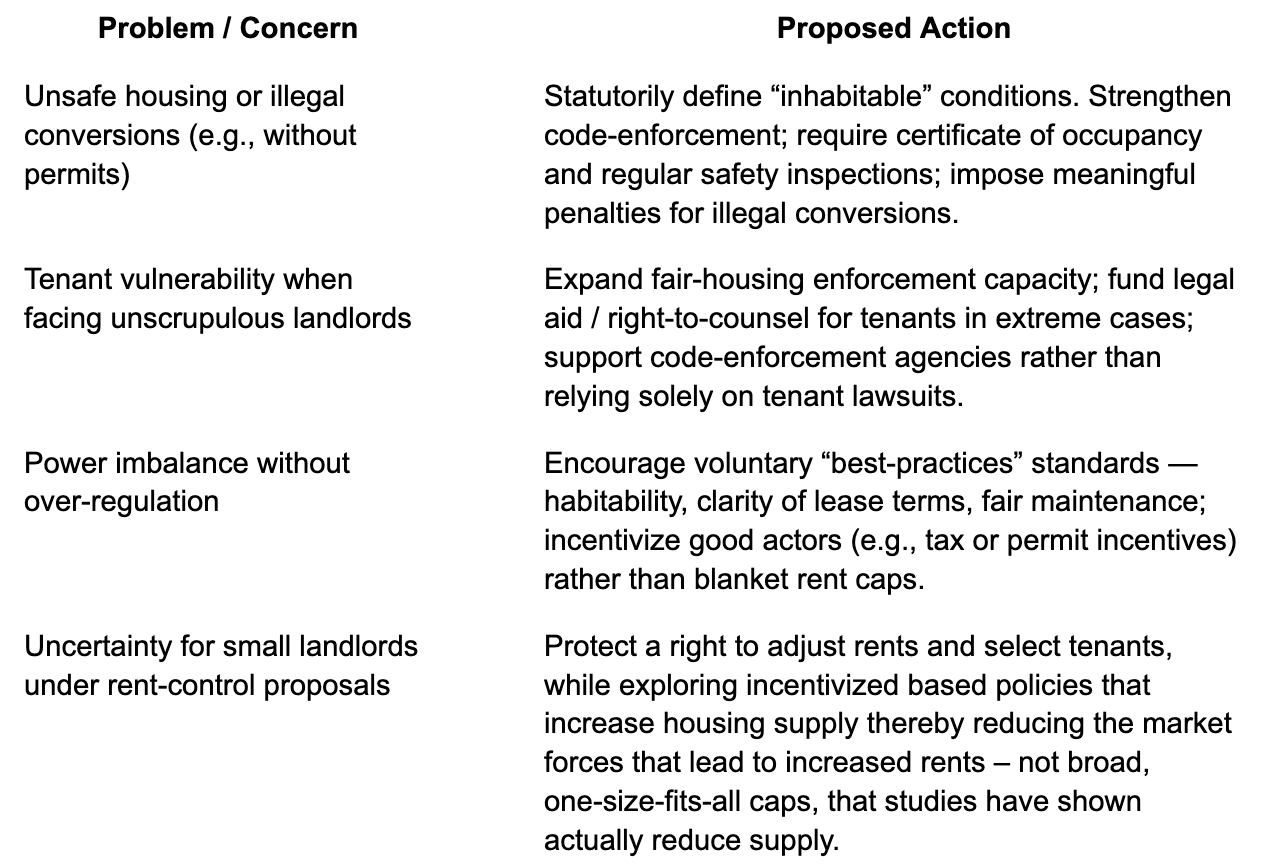
Table: Balanced Practical Solutions
A Call for an Alliance — Not a Tug-of-War
We believe in a Hawaiʻi where rental housing works for both tenants and rental housing providers — especially the mom-and-pop rental housing providers who comprise a significant portion of the rental market.
We support responsible regulation aimed at eliminating slumlords and protecting tenants’ health and safety.
We oppose sweeping, one-size-fits-all mandates that reduce rental housing providers’ discretion, turn housing into a political battleground, and discourage small property owners from participating in the rental market.
We urge lawmakers, tenant-advocacy groups and government agencies to collaborate with small housing providers to craft policies that recognize the diversity of rental-housing providers.
If we don’t — we risk shrinking Hawaiʻi’s housing supply by driving out mom-and-pop housing providers, thereby reducing rental options and driving up costs for tenants.
Conclusion
The abuses at Union Plaza are horrific, and we do not excuse them. They must be confronted — and the people responsible must be held accountable.
But the article’s call for a sweeping movement of tenant power — with rent caps and restrictions on lease renewal — misses a critical nuance: many rental housing providers are ordinary Hawaiʻi families, not institutional landlords or corporations.
If laws shift too much responsibility onto them — without safeguards or support — we’ll see fewer mom-and-pop housing providers willing to rent, less affordable housing overall, and greater pressure on the market.
At HRHPA, we stand for fairness, balance, flexibility — and real reforms that protect tenants without punishing responsible small rental housing providers. We call on decision-makers, community advocates, and renters to join us in creating a sustainable rental-housing ecosystem that works for all.
We welcome your voices. Reach out. Let’s build housing solutions — together.
